
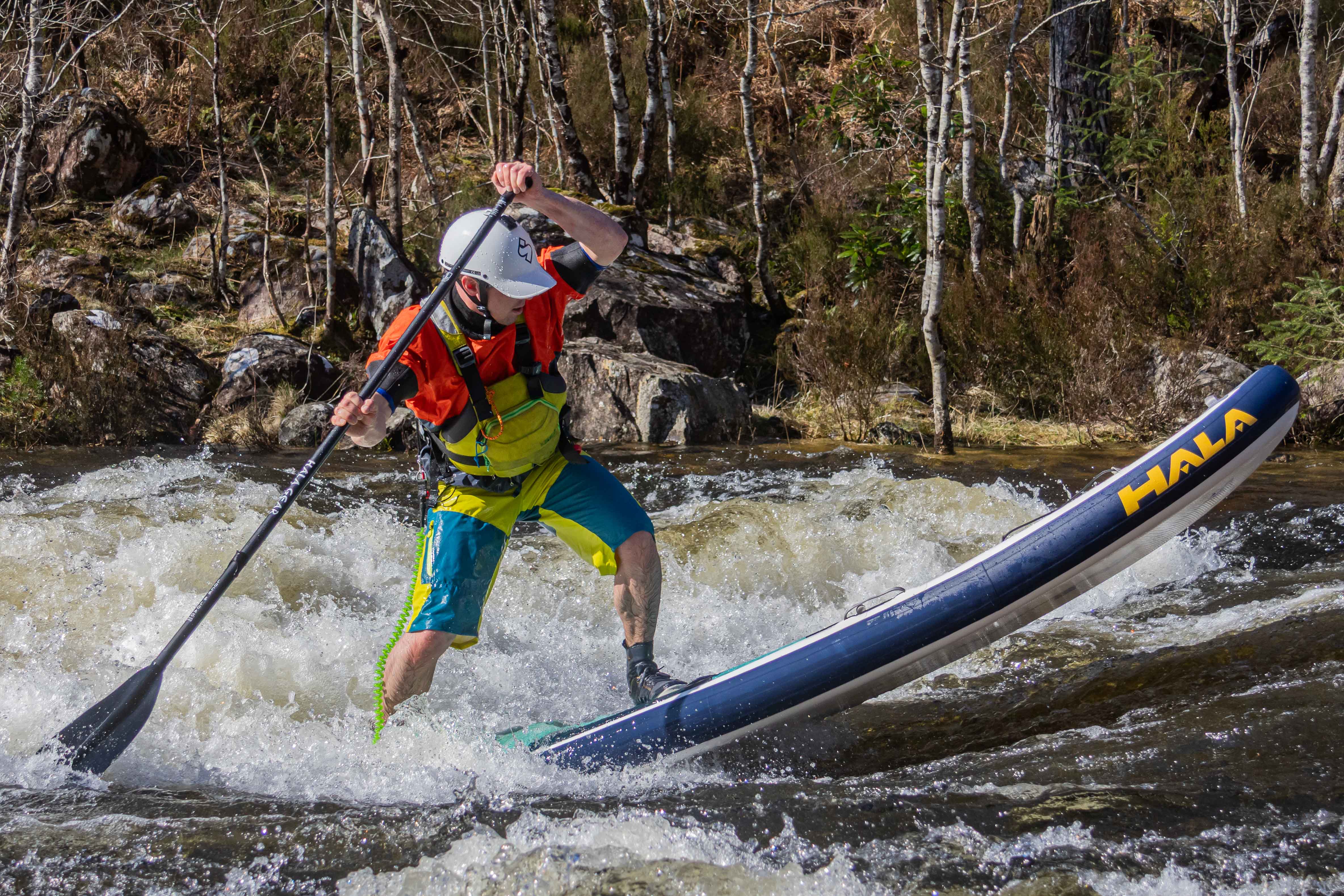
Tips & Tricks: featuring Jim Miller
Whether you're paddling a calm lake, exploring coastal waters, or dropping into your first whitewater rapid, every paddle involves risk. The goal isn't to eliminate risk entirely. It's to understand it, manage it, and make decisions that match your skill level and goals.
For this edition of Hala Tips & Tricks, we asked Hala ambassador and whitewater instructor Jim Miller of Highland Outdoor Adventures in Scotland to share his thoughts on risk assessment while paddle boarding. Jim has spent years teaching paddlers in rivers, surf, and open water environments, helping people develop the judgment and awareness that lead to safer and more enjoyable days on the water.
Below are Jim's thoughts in his own words.
Risk Management on SUPs
By Jim Miller
The first thing to consider within risk management on any paddle boarding, whether you are getting sent on a super gnarly river or learning to stand for the first time on a board, is risk vs reward.
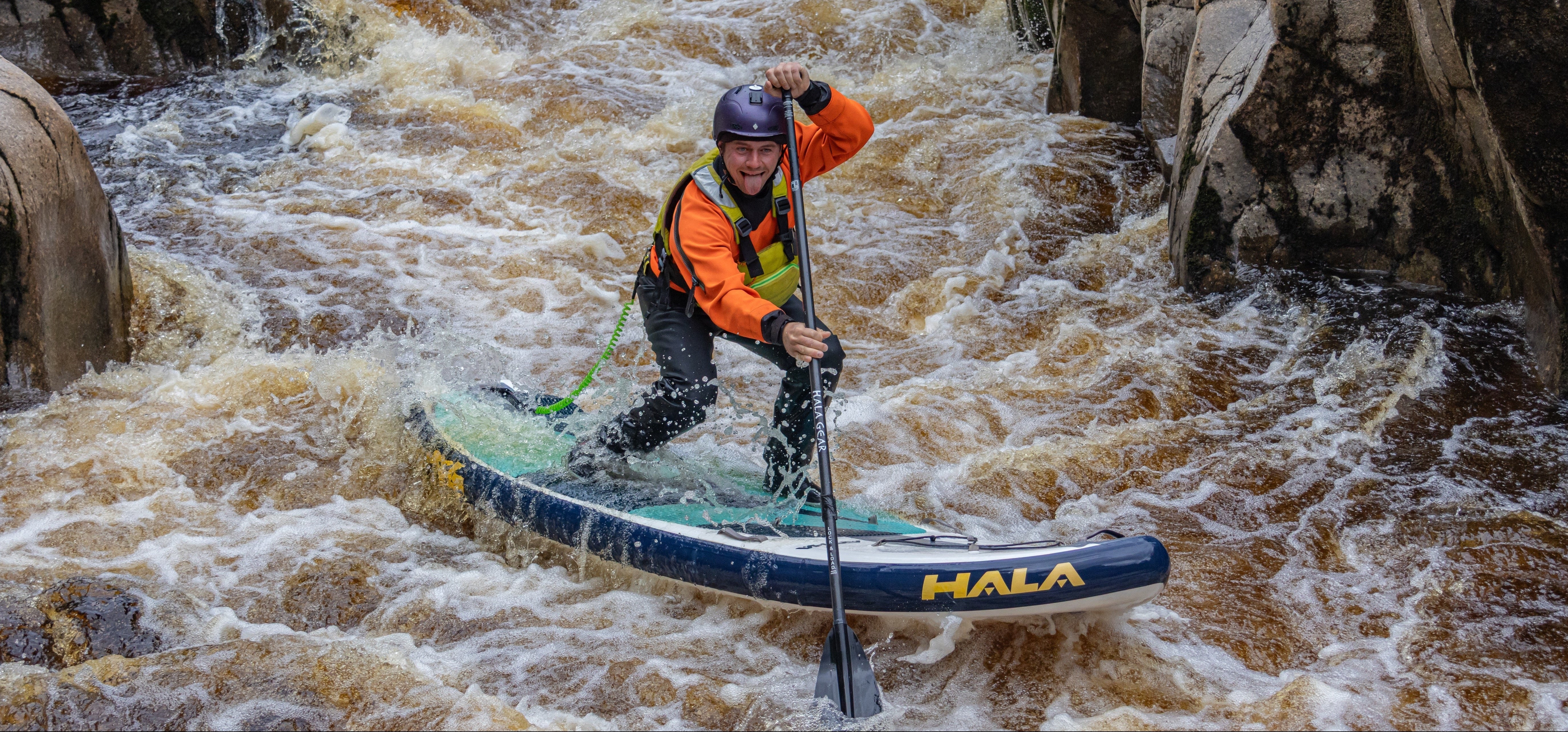
Is it worth sending this rapid - what is the risk? Is it possible? What is the reward? After considering all these questions, then you have to make your decision… For example, the risk in a shallow rapid is explicitly different from the risk in a big water rapid - a fall in the shallows could involve hitting rocks and injury if not managed appropriately, a fall in bigger water could involve harder swims, being hit by waves, even maybe flush drowning… Are you connected to your board? In the shallows maybe it doesn’t matter as much, but in bigger water separation from the board could become a serious issue within a short space of time. Can you paddle the rapid itself, have you done it before, do you know the moves you need to make - do you have a backup plan, i.e. go to a knee or two knees, or make an eddy and carry around… What is the reward - enjoyment, photos, ego… What is worth it to each person is different, and everyone has their own reasons for paddling.
For the author, if he thinks he can paddle the rapid and has mates doing it as well, then great, it's social and fun. If it will make a super cool photo and he can paddle the rapid, then great. If he isn’t sure whether he can paddle the rapid and the risk is high, then why bother? There would have to be a very good reason, like potentially helping someone out.
One of the riskiest things in paddlesports and paddle boarding in general is open water and offshore winds. Have you checked the weather forecast before heading out, do you know that you can manage in the conditions and fight against the wind while paddling if you have to? If so, great, have an awesome paddle. If not, then you need to consider tactics and maybe stay in sheltered areas or, worst case, go somewhere else.
If you are teaching people, then there is even more to consider… Have you accurately checked their ability first, have you discussed appropriate safety briefs and alternative options, do the clients really truly understand the risks? If they are young people, do the parents/guardians really understand the risks… If it goes wrong, what is the worst that can happen and can you deal with that… For example, leading a group down a rapid. If you don’t know all 6 people can paddle it, then the worst case would be 6 swimmers at once, risking injuries, board separation, etc., so tactics then come into play, running 1 at a time or in pairs to minimise risk but still help each other.
So in short, you need to decide what paddle boarding truly means to you! And stick to your own ethos - there is no right or wrong, only different. We all paddle for different reasons, so go have fun on the water and enjoy it safely!
Final Thoughts from Hala
One of the best lessons in paddle boarding is that good judgment often matters more than pure skill. The strongest paddlers aren't always the ones charging the biggest rapids or paddling the furthest from shore. They're the ones consistently making smart decisions before they ever put a blade in the water.
As your paddling progresses, continue building your skills, understanding conditions, and choosing equipment that matches the environments you paddle most often. Whether you're exploring flatwater, learning river skills, or chasing bigger whitewater objectives, the right preparation helps create more good days on the water.
Looking for gear built for adventure? Explore Hala's collection of inflatable paddle boards, river-ready SUPs, paddles, fins, leashes, and accessories designed by paddlers who spend their lives on the water.
1 comment
Not that it matters but I’ve been paddling whitewater since ’75. All sorts of craft Kayak, C1 & C2. At 76 I hit a “been there done that” until I took up paddle boarding whitewater renewed my passion for paddling. Came home a leaking a bit rock rash my girlfriend “you must really like that, yes”. Heading up tomorrow.
The Hala 9.6" is my trusty steed.
Steve Male Thomas
Leave a comment
This site is protected by hCaptcha and the hCaptcha Privacy Policy and Terms of Service apply.